
JULIA DE CASTRO. A SOUND PARASITISATION
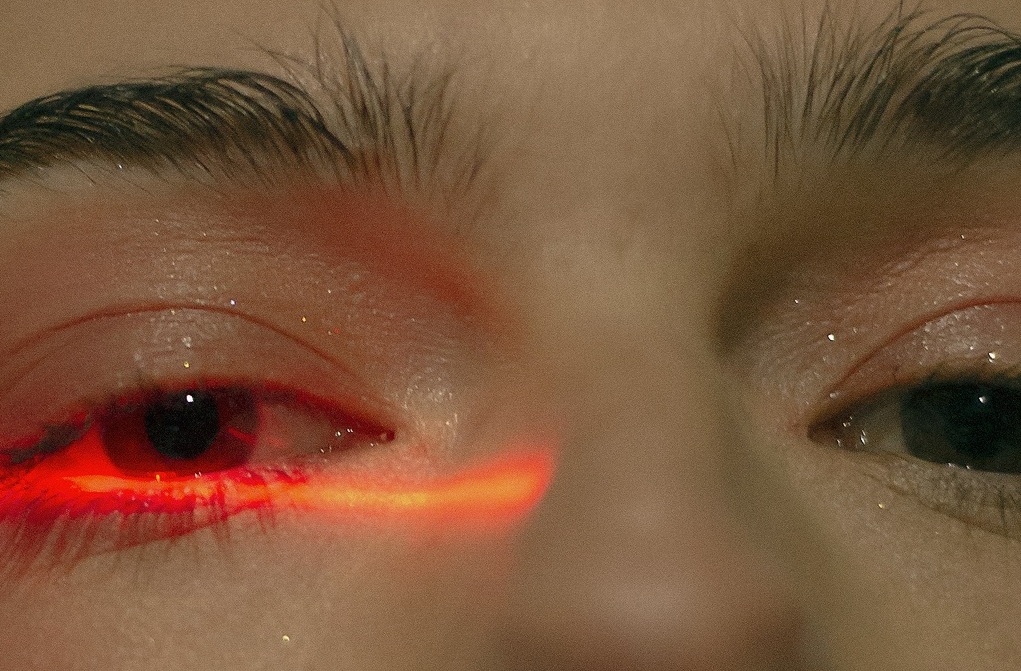
Picture: Felipe Huertas.
A sound parasitisation may be conceived as a non-invasive intervention in the space, a presence that dwells there subtly and temporarily.
Here, sound acts as a parasitic agent: it attaches to the architecture, seeps through its cracks and adapts to the rhythms of the building and the flows of the people who move through it. Although it doesn't occupy the space visibly, it has the power to change it, altering the perception, time and attention of visitors.
For this new intervention, the artist Julia de Castro (Ávila , 1984) uses voice to carry out a sound action based on a dialogue, or a reaction, with some of the pieces in the shows on display at the museum. Situated next to each of the selected works is a QR code for visitors to download the interaction.
As with the previous graphic parasitisation of María Medem[CM1] , this sound intervention doesn’t add a new work to the space but is installed within it, like an alien yet simultaneously intimate body. The work is manifested in the listening, appearing and disappearing, blending into and transforming the surroundings without fixing on a specific point.
The sound action doesn’t introduce another autonomous element, but infiltrates a pre-existing structure and language, activating them from within. It operates like an additional layer that is activated by touch, friction or contagion, almost imperceptibly, thus subverting the habitual use of the museum space and proposing another form of relationship with it.
With this proposal, the Museo CA2M becomes a resounding body, invaded by sounds that flow through it, adding tension and rewriting the building without leaving a visible trace.
Julia de Castro (Ávila, 1984) is a multidisciplinary artist. She has degrees in Art History , Text-based Acting and Violin. She did a residency at the Spanish Academy in Rome in 2017/2018 and is currently a resident at the Spanish Film Academy with her second feature film Azucena es un metal.
As a musician, she has released her first solo album La historiadora (El volcán, 2020) and she is also the founder and composer of the project De la Puríssima, which recovered the minor theatrical-music genre known as Cuplé, developing it as an essential performative legacy in the history of female sexuality. This proposal led to the release of two albums.
As an artist she has participated in group exhibitions with Esther Ferrer and Pedro G. Romero, and she is currently preparing her first solo show with Galería Arniches (Madrid). She has performed at ARCO, BatahlaCentro Do Cinema (Porto) and the MACA (Alicante).
She is also an actress, filmmaker, dramatist and writer, all disciplines for which she has received different honorary mentions, nominations and awards.
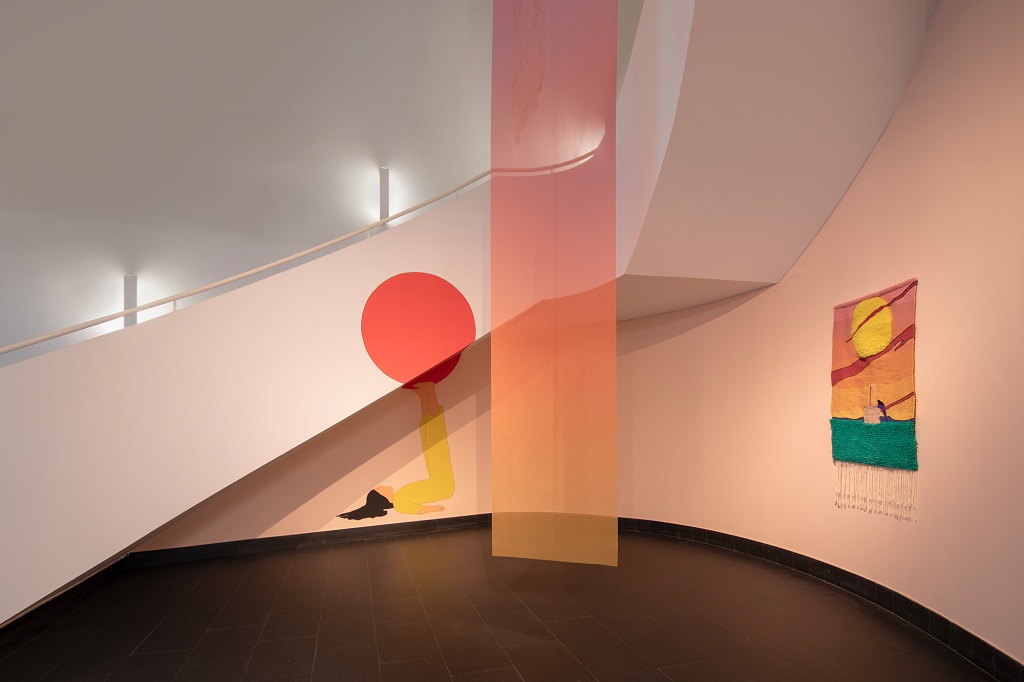
This first graphic intervention by Maria Medem opens a space for reflection on illustration at the CA2M Museum. Maria Medem's imaginary universe, reflected in different non-exhibition areas of the Museum, generates a sensorial and experimental atmosphere where the limits between the real, the strange and the ambiguous are blurred and materialized in different forms.