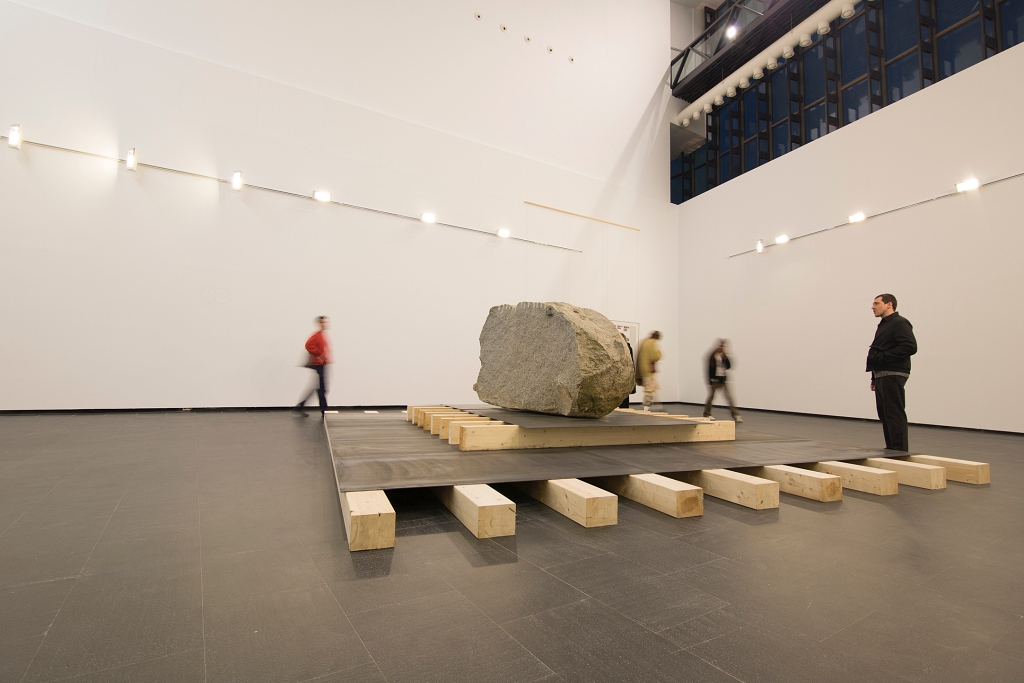
In his work, Xabier Salaberria explores the forms in which certain structures behave in specific spaces, perverting their apparent neutrality and questioning the categories in which they are conventionally inscribed.
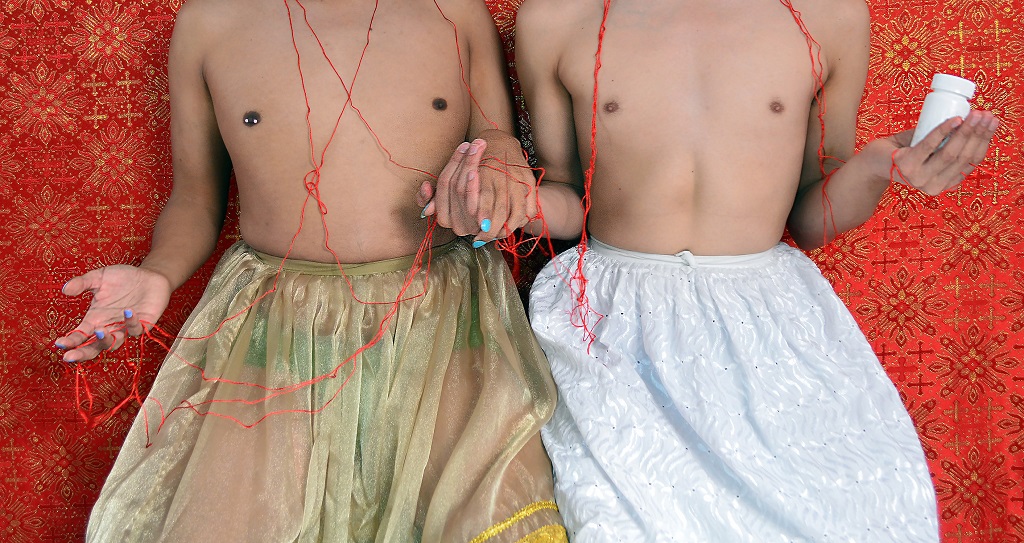
DAY WITH(OUT) ART 2022: BEING AND BELONGING
Museo CA2M in partnership with Visual AIDS present Day With(out) Art 2022 by presenting “Being & Belonging”, a programme of seven short videos highlighting under-told stories of HIV and AIDS from the perspective of artists living with HIV across the world.
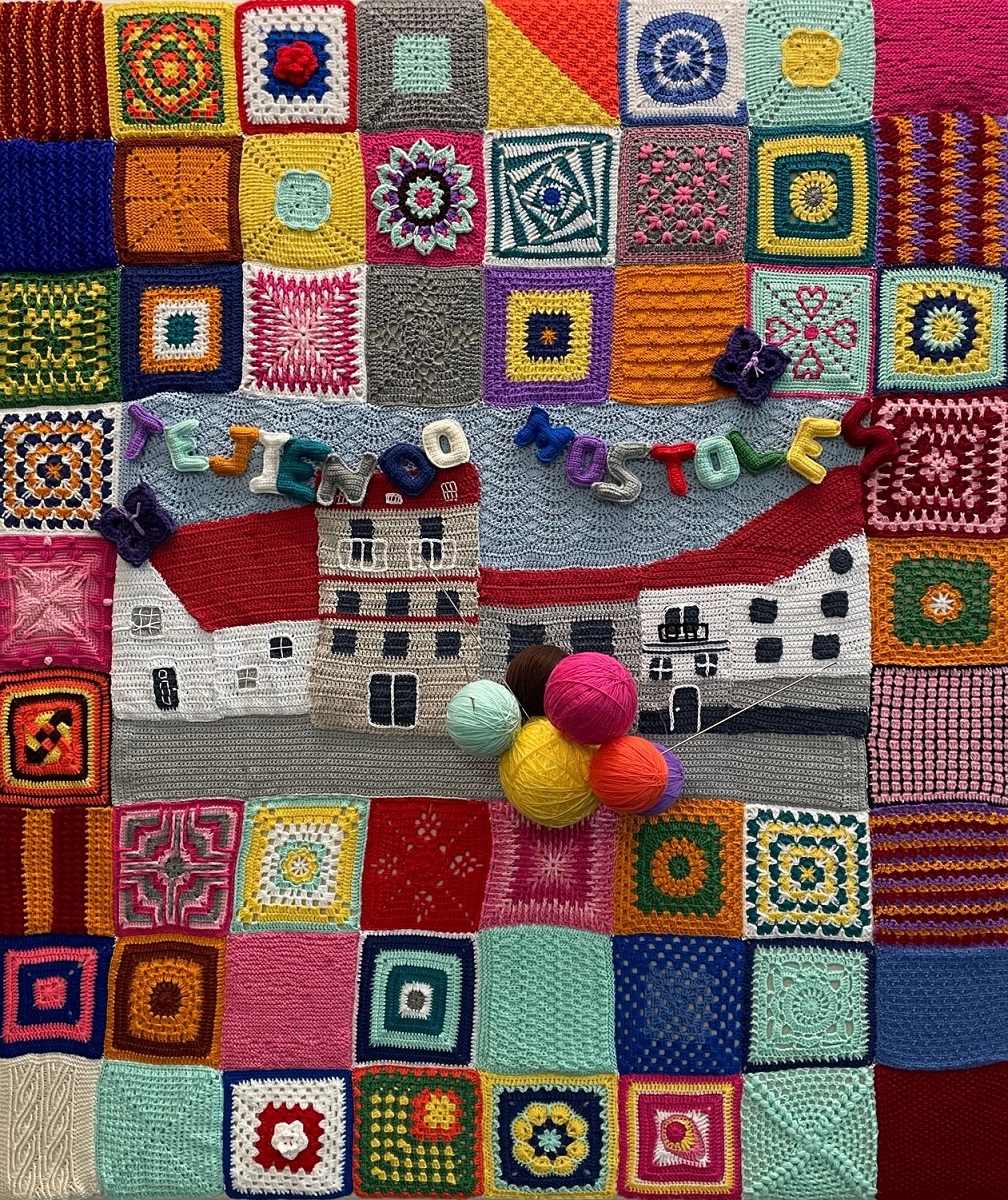
In 2014, three women who lived in Móstoles began to meet regularly at the CA2M cafeteria to chat while crocheting together. As they were gradually joined by more and more people, the museum ended up offering them more space, and every Wednesday from 11.00 a.m. to 2.00 p.m. they were provided with a large table that would soon be complemented by a textile work from the museum’s permanent collection by artist Teresa Lanceta.
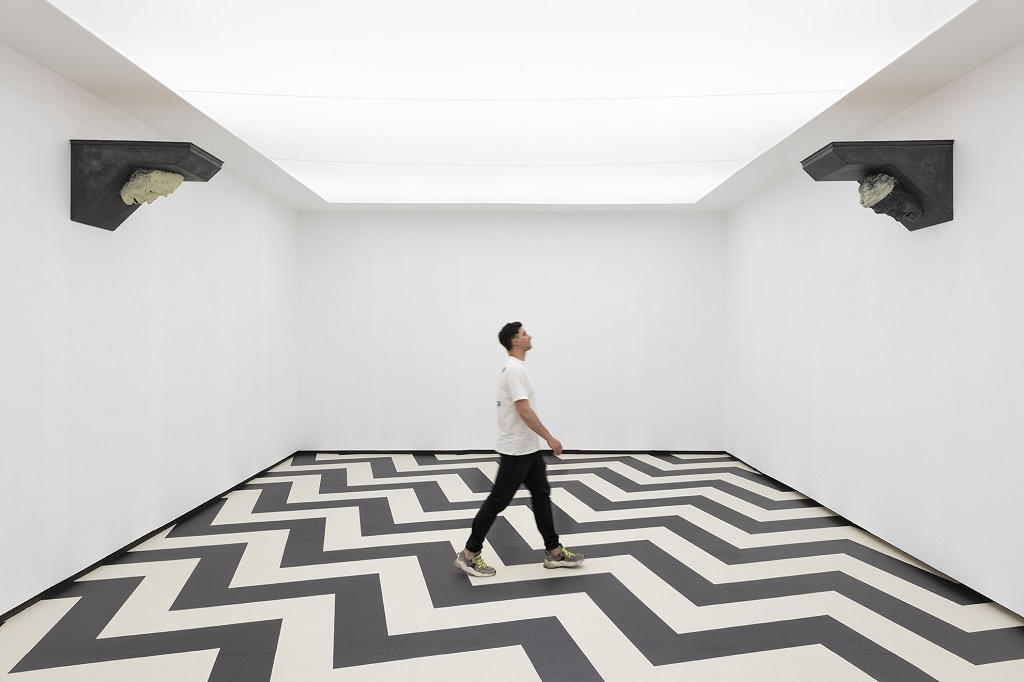
This exhibition commemorates the 70th anniversary of the birth of Juan Muñoz (Madrid, 1952-Ibiza, 2001), perhaps the internationally best-known Spanish artist of recent decades, following his dazzling career from his first exhibition in 1984 to his untimely death at the age of 48.
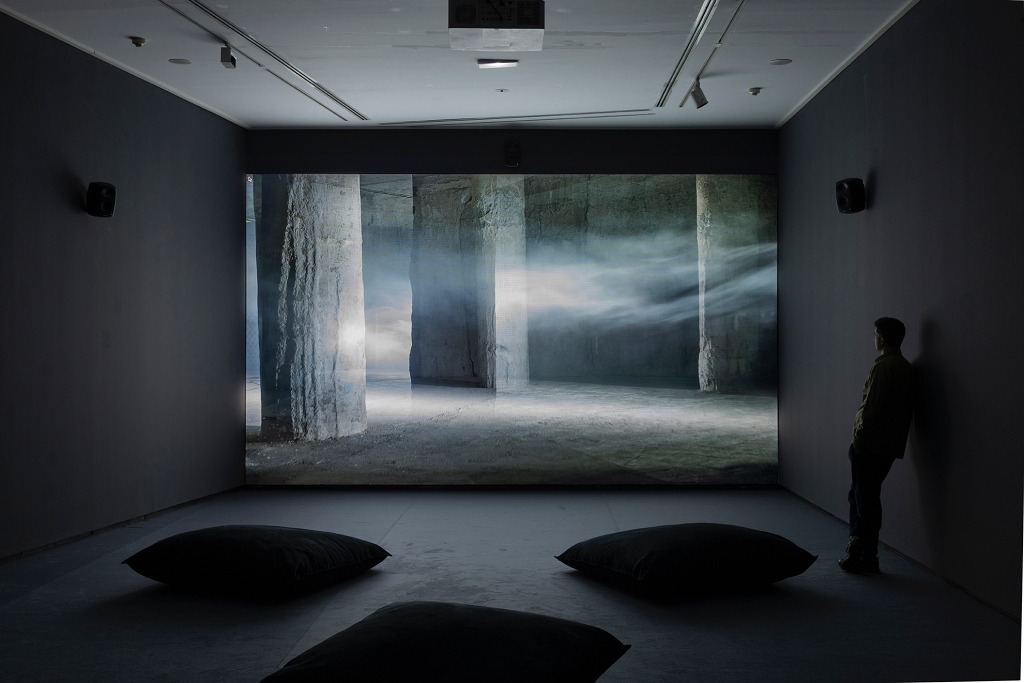
This exhibition by the artist Karlos Gil (Talavera de la Reina, 1984) is the most complete public presentation of his work to date. It showcases some of the various lines of work that have marked his practice in recent years: the relationship between artificial and natural, technology and the body, obsolescence, the complexity of second and third degree urban signs, science fiction... among other issues.
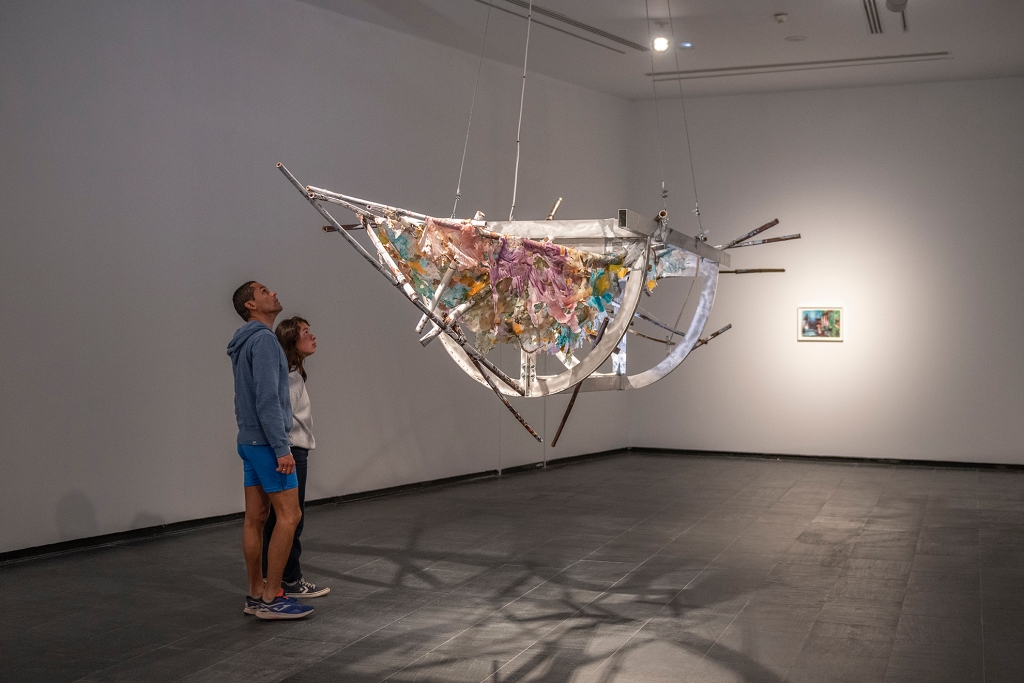
Emil Lime is an exhibition by Esther Gatón curated by Cory John Scozzari. This project sets in motion forms, techniques and conceptual interests frequent in Gatón's practice, such as the construction of ambiguous environments, amateur science, visual artifices, and the crossovers between femininity and machinery, articulating them in a single installation.
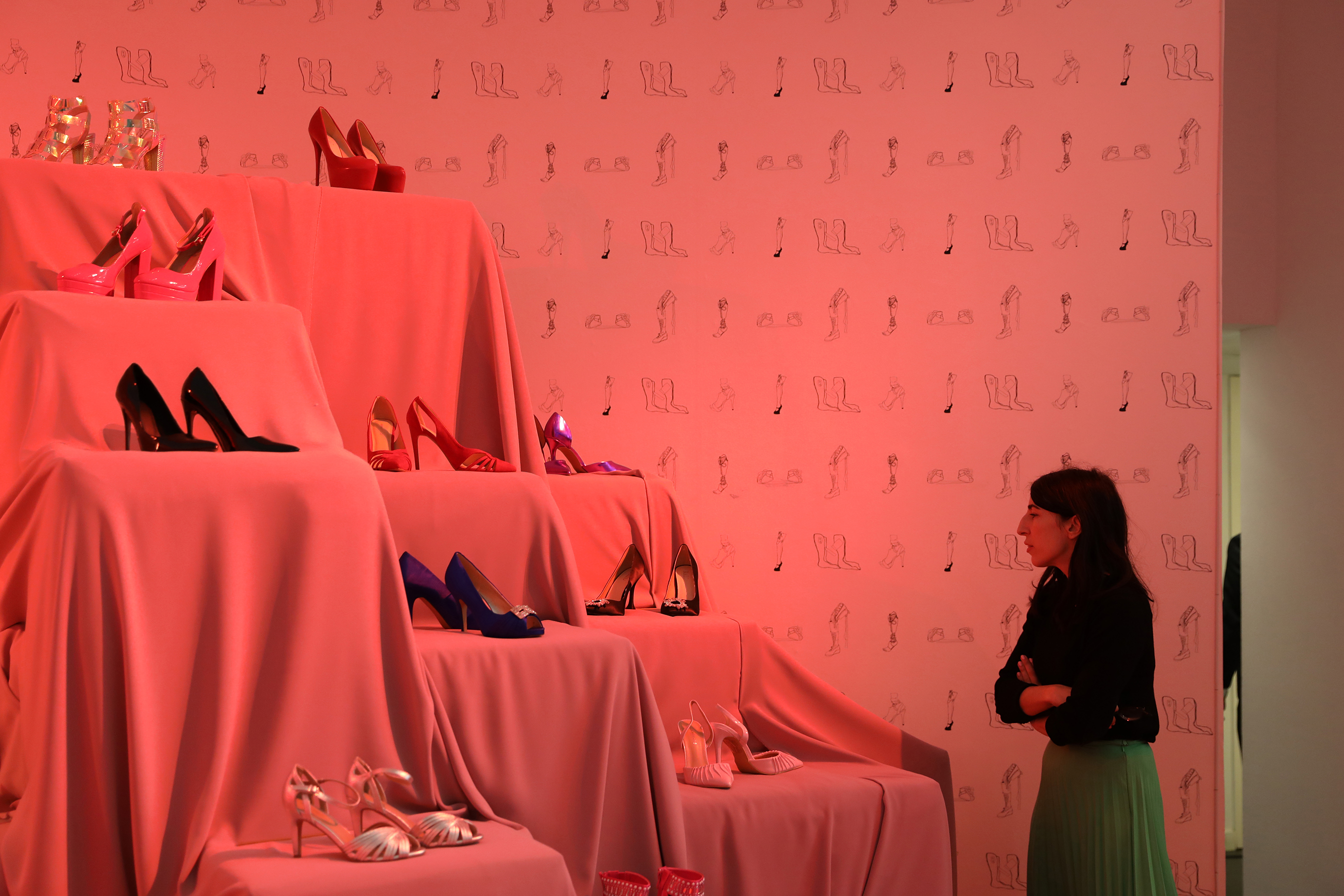
Fantasy, high heels, pink, interlude, prosthesis, accessibility, the norm perverting the norm: this is the world of Costa Badía (Madrid, 1981) which will take over the ground floor of Museo CA2M from 26 January.
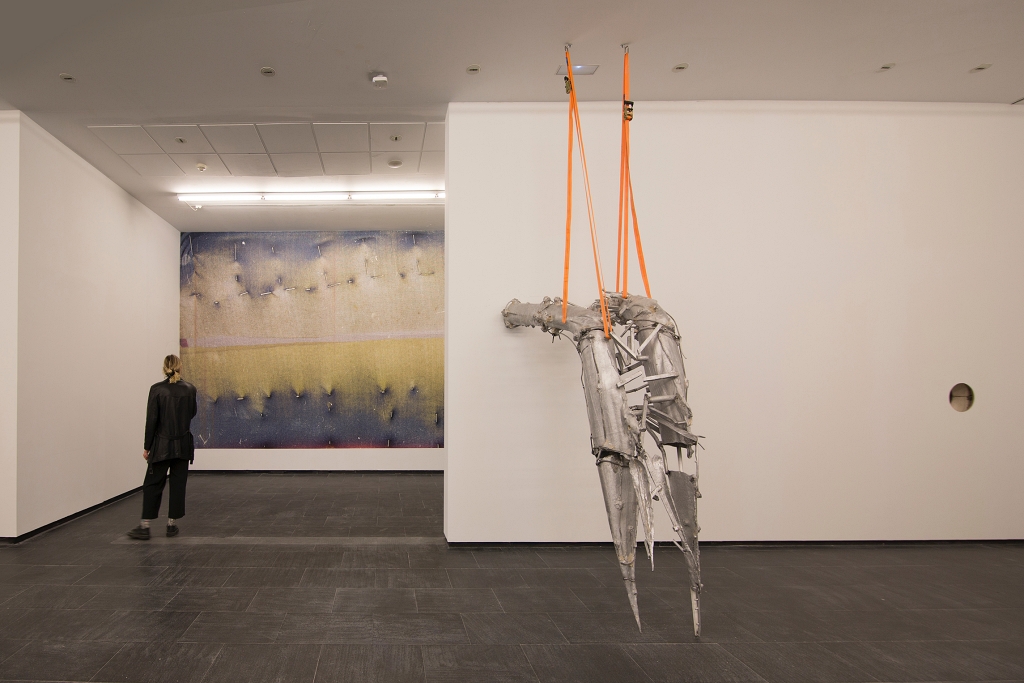
June Crespo understands sculpture as an exercise that enables her to bring together seemingly opposed qualities. Her works partake equally of the petrean and the perishable, the mechanised and the manual, the abject and the sensuous. The convergence between materials and motifs creates a vocabulary that seems interpretable as a contradiction.