Activity

Activity

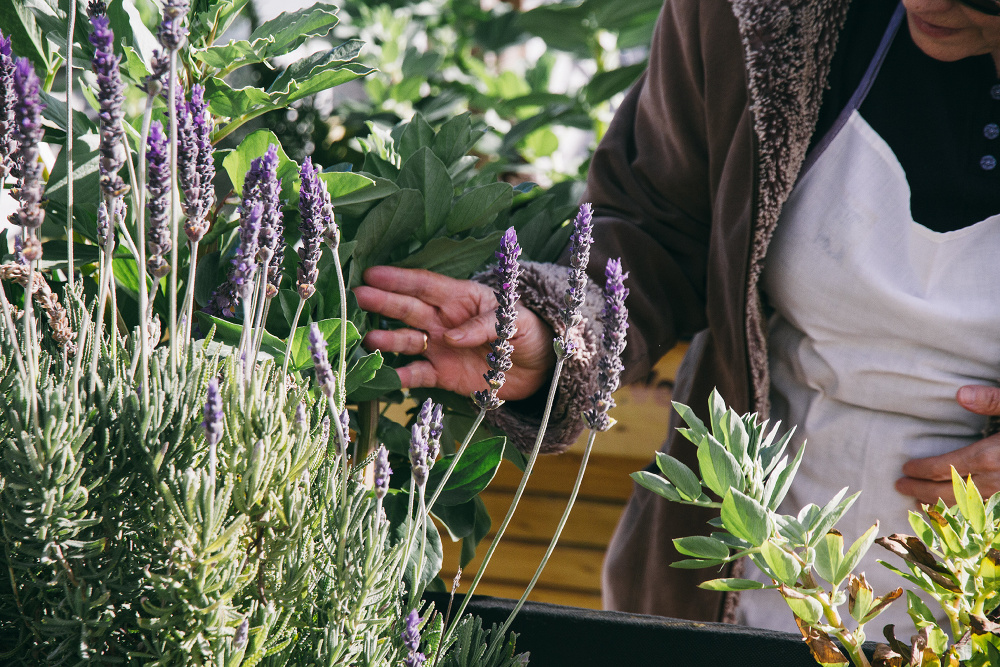
Since its inception, the Roof Terrace Garden was conceived as a space with a mission to go much further than a simple organic agricultural school, and with the goal to build a community. Today that challenge is more pressing than ever, and for this reason we need to open up our horizons and underscore the need for a direct practice of sustainability in cities, reinforcing concepts like grow-your-own, self-sufficiency, DIY and kilometre-0 production, incentivizing a culture of proximity.

Cities are a big drain on resources. They have to import almost all their needs and are highly vulnerable to the challenges thrown up by the growing and now palpable environmental crisis. But cities are also a source of opportunities if you know how to make the most of their potential. Our current model for cities came into being under a set of parameters that no longer make sense for the twenty-first century. It is up to us to take stock of the situation and to change the model towards one more aligned with the needs of our decade. During the year of 2023, we will focus on the possibilities that cities can offer, with the goal of raising awareness among the wider community and to equip ourselves with the tools to understand our surrounding environs and transform it.

For this big challenge ahead, we are bringing on board the experience and collaboration of the Instituto de Transición Rompe el Círculo (Break the Circle Transition Institute) whose activity over the last decade has been focused on sustainability in cities, taking Móstoles as a groundbase for experimentation. With this purpose in mind, the Roof Terrace Garden now becomes the Community Sustainability Laboratory.


PROGRAMME 2023

Thursday 2 February 11:30-1:30 pm. Introduction to gardening in terraces. A roof terrace offers lots of possibilities no matter how small it is. In this workshop we will take a look at some of the new tendencies in organic agricultural we could apply in our terraces, overviewing all the various methods of agro-organic farming.

Thursday 9 February 11:30-1:30 pm. Preparation of seedbeds and growing crops in greenhouses. The creation of our own seedbeds is a simple technique we should learn to begin our own vegetable garden from scratch and how to accommodate the new plants into our available space. In addition, growing crops on a roof terrace has the advantage of making the most of a nearby space with a regular temperature which is higher than the general outside temperature at this time of year, thus allowing us to bring forward planting and growing to ensure a crop of early spring vegetables.

Thursday 16 February 11:30-1:30 pm. Designing a roof terrace vegetable garden. We will learn to make the most of available space in all directions, understand the plays of light and shadow and use them in our favour to obtain the greatest possible production in the least space possible. Vertical gardens, microclimates, direction, materials.

Thursday 23 February 11:30-1:30 pm. Growing in pots. A terrace is an artificial growing area but this should not prevent us from growing natural vegetables. With a good substrate and the right pots, we can plant whatever we like.

Thursday 2 March 11:30-1:30 pm. Companion planting. A good way of being able to grow the greatest number of plants in the least space possible is to learn to plant different crops in proximity and tips to grow with less space between plants than normally recommended.

Thursday 9 March 11:30-1:30 pm. Irrigation systems for terraces. The choice of a good watering method is crucial for the success of our crops. We will show you how to choose the best system for your little vegetable garden in such a way that we will use the least amount of water possible while ensuring that our plants get all the moisture they need. Irrigation systems, watering cans, gravity irrigation, self-watering.

Thursday 16 March 11:30-1:30 pm. Spring planting. In this workshop we will address the planting of vegetables we had previously prepared in seedbeds and we will learn to plant both with root ball and with direct sowing.

Thursday 23 March 11:30-1:30 pm. Preparing remedies and preventive measures against plagues. The fact of living in a city does not free us from the typical plagues that affect plants. We will learn to prevent attacks and prepare remedies and liquid fertilisers for our plants.

Thursday 30 March 11:30-1:30 pm. Companion planting in organic gardening. Companion plants are those that help us, among other things, to attract pollinating insects. This is even more necessary in cities due to the scarcity of auxiliary fauna.

In addition, at the end of the month of March, CA2M will host a plant cutting exchange for the third time. This year, besides exchanging indoor and outdoor plants, we will be carrying out a kokedamas workshop after which you will be able to take your new plant home with you, ready to go into its chosen place.

Activity type
Dates
FEBRUARY-MARCH
Target audience
Topics
Entrance

Since its inception, the Roof Terrace Garden was conceived as a space with a mission to go much further than a simple organic agricultural school, and with the goal to build a community. Today that challenge is more pressing than ever, and for this reason we need to open up our horizons and underscore the need for a direct practice of sustainability in cities, reinforcing concepts like grow-your-own, self-sufficiency, DIY and kilometre-0 production, incentivizing a culture of proximity.

Subtitle
ROOF TERRACE GARDEN
Categoría cabecera
Huerto
COMMUNITY SUSTAINABILITY LABORATORY 2023
More information and contact
Media footer

Picture: Patri Nieto.

Is it a cycle?
Disabled
Duration
THURSDAY 11:30 - 13:30

Last year CA2M started working with the EnterArte teachers’ group. The collaboration gave rise to a workshop exploring the interrelationship between school and museum which exceeded all expectations. This year the project will continue experimenting with the mysterious; an activity inviting us to let ourselves be carried along and discover the space of the museum, paying particular attention to minimum detail, to little things and what normally goes unnoticed.

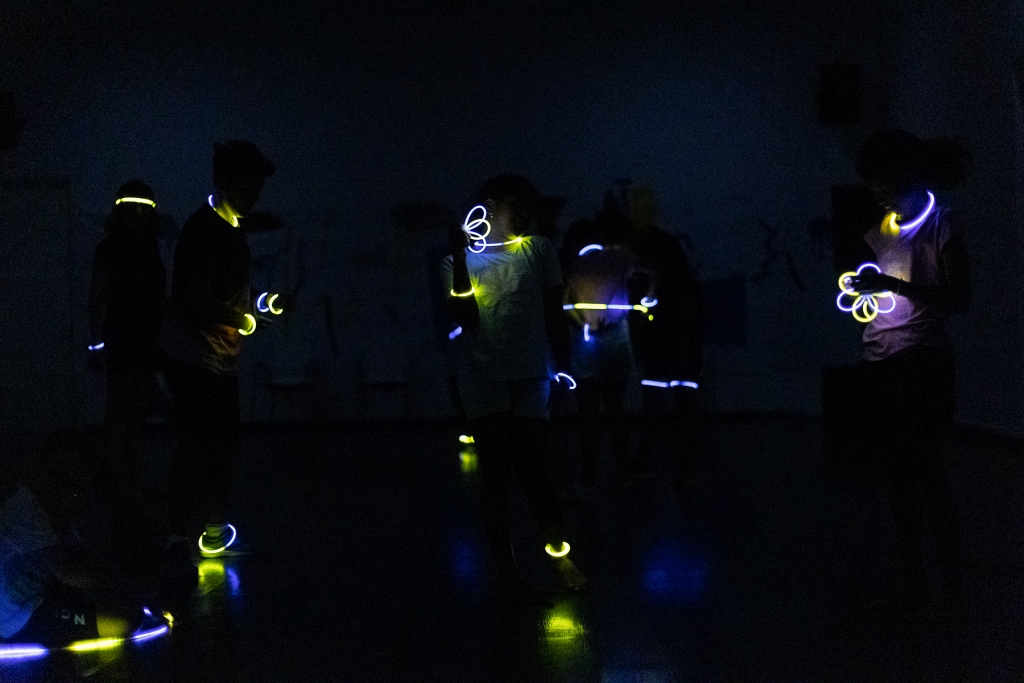
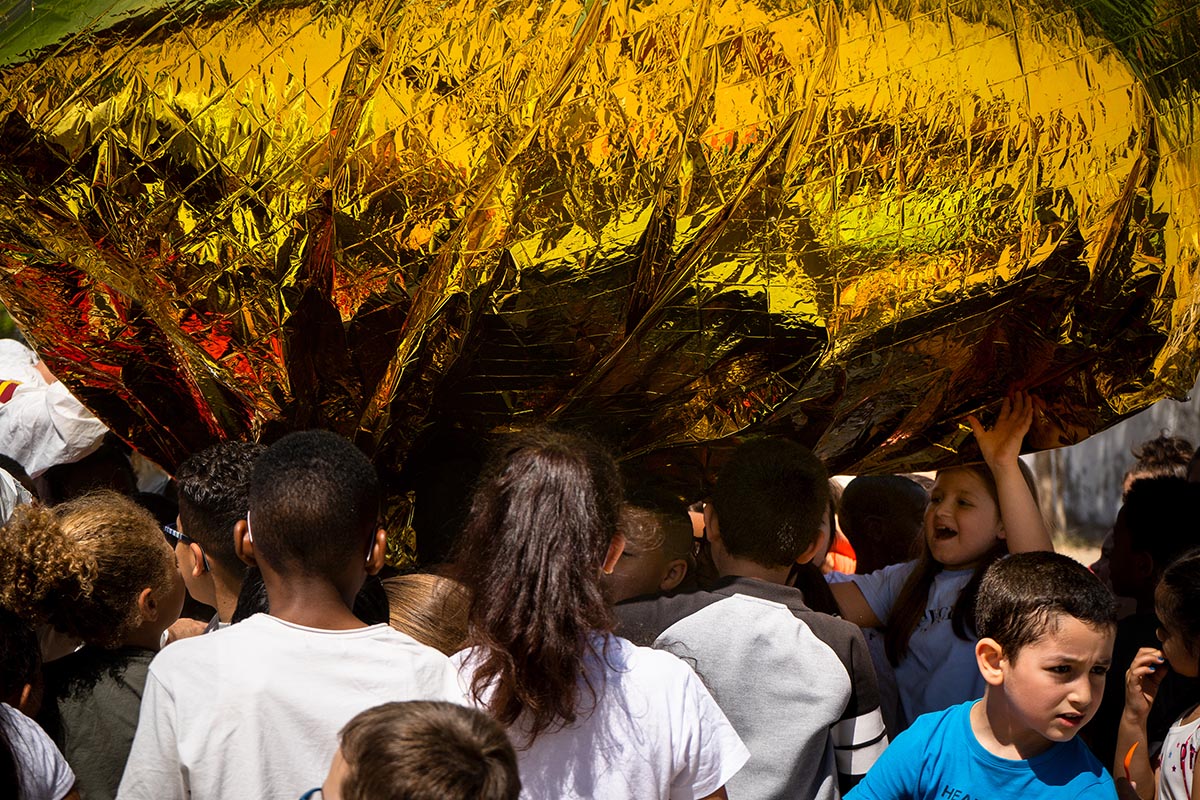
"Let’s get soaked by a wave, aahh!" is a project working with ideas of transformation, art education and aesthetic play. It is a workshop-parcours-action in which we will experiment with different media, materials and spaces at CA2M for artistic expression.

Anyone turning up to this event will actively generate new narratives with the artworks and spaces at the museum, will compose and decompose, and play. But above all else, they will look at art from a totally different perspective, from childhood. We will imagine new ways and messages to arrive at these new collective narratives and imaginaries.

EnterArte is a group of teachers who work with different areas of education. Its work investigates how to bring art into their respective fields of education. Its mission is to rethink through the filter of art, to take a look at teaching from the optic of contemporary art practice and the relationship between school and museum. Art that reaches out and makes us think and act.


Activity type
Dates
FROM 1 FEBRUARY
Acceso notas adicionales

Capacity: 30 students

Entrance

This year the project will continue experimenting with the mysterious; an activity inviting us to let ourselves be carried along and discover the space of the museum, paying particular attention to minimum detail, to little things and what normally goes unnoticed.

Subtitle
WORKSHOP FOR PRIMARY SCHOOL CHILDREN
Categoría cabecera
Que te moja una ola
LET’S GET SOAKED BY A WAVE, AAHH! 2023
More information and contact
Media footer

Picture: Patri Nieto.

Is it a cycle?
Disabled
Duration
EVERY WEDNESDAY | 10:30 - 12:30

Various authors, whether from the perspective of science fiction literature, like Octavia E. Butler, or contemporary feminist theory, like Donna J. Haraway, advocate the need to overcome certain concepts that condition our contemporary understanding of the world, such as the Anthropocene, and to propose other alternatives, like the Chthulucene, in order to rethink a relationship between species that leaves behind the primacy of the human being as the centre and measure of all things and explores the potential of this relationship to generate new ways of life and possible new more sustainable and solidarity worlds for all species that inhabit it, that allow us to survive the current situation of climatic emergency. From Haraway’s notion of “companion species”, this film season wishes to examine how cinema—understood as a popular manifestation of contemporary anxieties—explores the relationship between species and the human being’s relationship with their environs from various optics; some more catastrophic and others more hopeful, in consonance with Haraway’s vision.

The cult film Phase IV, a canonical example of the apocalyptic sci-fi movie, introduces us to a dystopia in which ants develop a group mind and consciousness of their power and take over control of the Erath, forcing human beings to adapt to the new civilization in which both species have to live together. On the other hand, Soylent Green, another classic sci-fi movie, and a visionary example of the destructive effects of climate emergency, takes a look at the capacity of the human being to destroy the environment in which the Earth must survive.

From a less catastrophic, although no less unsettling perspective, Little Joe reflects on the capacity of science to force this collaboration between species through genetic manipulation and how its form of perverting the course of nature means that it does not always serve human purposes in the way it was intended. The purported supremacy of the human species is brought into question when the modified plants overturn the relationship of power and find ways of surviving that make use of the needs of the people who created them.

Meanwhile, The Shape of Water, Border and Gunda offer gazes that anticipate a less-human oriented future with more interspecies collaborations. Gunda borrows the narrative and formal structures of the documentary to follow the daily life of a pig, two cows, and a one-legged chicken, reminding us that we share the world with millions of different species that deserve to be taken into account and appreciated by us within their own environs, with their own everyday routines and with the same compassion with which we observe ourselves. Border takes a look at how we construct a non-human identity in contemporary Finland and how to develop networks and structures for coexistence between two species—humans and trolls—despite their shared disturbing past. Finally, Guillermo del Toro’s The Shape of Water is a melodrama telling the love story between a woman and an amphibian man, opening the door to a relationship between species like those told by Octavia E. Butler in her sci-fi stories. In conclusion, this film season wishes to offer and explore ways in which film imagines us, how it thinks of other species and our relationship with them and thus anticipate the various worlds in which we will have to live.

Curated by Jara Fernández Meneses and Estrella Serrano Tovar.

Jara Fernández Meneses has curated film seasons for institutions like MNCARS and Cruce, and formed part of the programming team for Cineteca for four years and is a former member of the selection committees for the Documenta and Animario international festivals. She has written film reviews for Cahiers du Cinema. España/Caimán. Cuadernos de cine, cultural reviews for Serie B and has taught film classes in Kent and Exeter universities in the UK and at the Carlos III university in Madrid. In her free time, she likes to deejay vinyl records of black music and to play dominoes.

Estrella Serrano Tovar has worked in institutions like MNCARS, AECID and the Cervantes Institute. Naturally curious, she enjoys learning new ways of interacting with culture and art, understanding relationships with neighbouring communities as a key part of her work and trying to connect with people with shared interests to undertake new projects. She is the head of the Education and Activities department at Museo CA2M since 2020.

Activity type
Dates
2 February to 13 April 2023
Target audience
Topics
Entrance

This film series - understood as a popular manifestation of contemporary anxieties - seeks to explore the relationship between species and the relationship of human beings with their environment from different perspectives; some more catastrophic and others more friendly and hopeful, in tune with Donna J. Haraway's vision.

Subtitle
FILM SEASON
Categoría cabecera
Cine Interespecial
INTERSPECIES. RELATIONS BETWEEN SPECIES IN CONTEMPORARY FILM
More information and contact
Media footer

Still de Little Joe, Jessica Hausner, 2019.

Is it a cycle?
Disabled
Duration
Alternate Thursdays | 18:30 - 21:00

There are sounds that stick in your head, like a sewing machine, or when my mother used to wash clothes outside in our backyard, I remember sitting there listening to the rhythm with which she rubbed the clothes against the washboard, and for me, the sound of a washing machine is hypnotic, the purring motor of a fridge is like a whisper and when it rattles out a whistle I would have the iiiiiiiiiii in my brain all day, and I was never sure whether it was me or the machine, tinnitus, tinkling like flowing water inside your head, and then the silence was terrifying, and depending on your position you could hear your vertebrae because we all have internal, interior sounds and you sometimes hear a beat in your ears like when you come out of a club and keep getting that buzzing, ringing pum-pum-pum, and seeing as I live on the seventh floor all the clock bells sound differently and drive me up the wall. Have you never thought that a repetitive sound is like someone talking? Or maybe a ghost. You have to be very careful with all this, look for places that have voices and for voices that seem like they are not there because they are inside your head, in another world, in abandoned villages in Madrid, in the materials of things. We want to learn a song together, to rustle up a storm, to sing to the stars in Valencia and so on until we embrace all the sounds that exist in the universe.

An Amateur Choir is a creative project that welcomes any kind of voice which wishes to participate. Besides our own experimental sessions every second Thursday, we also have sessions with artists who work with the voice and listening. Some of the people who have passed through our choir are: Sonia Megías, Itziar Okáriz, Jaume Ferrete, María Salgado and Fran MM Cabeza de Vaca, Rocío Márquez, Alma Söderberg, Ainara Lagardon, Jhana Beat, Lolita Versache, Bea Narcoléptica, Luz Prado, Los Torreznos, Makiko Kitago, Julián Mayorga, Agnès Pe, Paloma Carrasco, Anto Rodríguez, Elisa C. Martín, Elena Murcia Pinto with Marina Peralta Murcia, Inma Marín with Jon Cañal and Tania Arias Winogradow with Milo-Andrey Ulises, Rolando San Martín, Amalia Fernández, Elena Córdoba, Raquel G. Ibáñez, Alex Reynolds, Black Tulip, tacoderaya, Mónica Valenciano, Ruth Abellán and Arturo Moya, Ojo Último, Monserrat Palacios and Fátima Miranda.

Activity type
Dates
12 JANUARY - 30 JUNE
Target audience
Acceso notas adicionales

Capacity: 40 personas

Entrance

An Amateur Choir is a creative project that welcomes any kind of voice which wishes to participate. Besides our own experimental sessions every second Thursday, we also have sessions with artists who work with the voice and listening.

Subtitle
CREATIVE VOICE WORKSHOP
Categoría cabecera
Coro Amateur 2023
AN AMATEUR CHOIR 2023
More information and contact
Media footer

Picture: Patri Nieto.

Is it a cycle?
Disabled
Duration
Alternate Thursdays | 17:00 – 20:00 h

A star enters twilight when, due to the effect of the rotation of the planet, it crosses the plane of the horizon and passes from the visible to the invisible hemisphere. In the case of the Sun this marks the end of the day. Sunset is a pale tint of orange. A completely imprecise and ambiguous representation of colour that happens fleetingly during twilight. The first use of sunset as the name of colour dates back to 1916.

In this brief meet-up at the museum we are going to create a space for leisurely contemplation. We will take a slow walkthrough enlivened with stories about colour, the work of Mitsuo Miura and actions that happen with light. Over the course of the visit, we will look more intently, we will try to stimulate our pupils in order to perceive differently and we will talk a lot, an awful lot, about colour. We will take a tour of the museum through its spectrum of colours, we will submerge ourselves in its light and the geometries, and we will go up to the roof terrace at the exact time to contemplate the mysterious colour of the sky at the moment when the sun disappears from Móstoles.


Activity type
Dates
Every Wednesday
Target audience
Acceso notas adicionales

Maximum capacity: 20 persons

Entrance

A star enters twilight when, due to the effect of the rotation of the planet, it crosses the plane of the horizon and passes from the visible to the invisible hemisphere.

Subtitle
VISITS TO MITSUO MIURA EXHIBITION
Categoría cabecera
Visitas Mitsuo
COLOUR CORDINATES
More information and contact
Media footer

Picture: Roberto Ruiz.

Is it a cycle?
Disabled
Duration
17:00 - 18:00H

Agustín Pérez Rubio, co-curator of the exhibition, invites us to join him on a tour to discover and talk about the various layers of the work of the US-Chinese artist Martin Wong.

On this guided walkthrough with the curator we are invited to participate and revisit a particular time and place that were seminal for the social relations of class, race and sexual orientation in the USA in the 1980s and 90s especially in the area of New York City known as Loisaida and its social reality of criminality, street culture, graffiti and drugs.

Wong proffered himself as a vehicle to open up the debate on the representation of sexual and cultural minorities in art, particularly the Asian and Latino minorities in the USA.

We will glean an insight into “the Bad Chinese” as he called himself, through an analysis of the sociological and political aspects of his work, and, in doing so, underscoring the transfer of language to the medium of painting, the complex mesh of multiple cultures, his interest in systems of language and the symbolism of the people he portrayed.

If you accept the invitation we will share impressions and resonances with our own experiences.

DATES

  • 10 December at 5:30 pm
  • 17 December at 5:30 pm
  • 7 January at 5:30 pm
  • 14 January at 5:30 pm

Prior enrolment by ringing (+34) 91 276 02 21 or by email ca2m@madrid.org

Activity type
Dates
November - December - January
Target audience
Topics
Acceso notas adicionales

Maximum capacity: 15 persons

Entrance

Agustín Pérez Rubio, co-curator of the exhibition, invites us to join him on a tour to discover and talk about the various layers of the work of the US-Chinese artist Martin Wong.

Subtitle
ENCOUNTER-VISIT WITH THE CURATOR TO THE MARTIN WONG EXHIBITION
Categoría cabecera
Visitas Martin Wong
MALICIOUS MISCHIEF WITH AGUSTÍN PÉREZ RUBIO
More information and contact
Media footer

Picture: Patri Nieto

Is it a cycle?
Disabled
Duration
From 17:30 to 9:00h

Cities are responsible for the emission of 75% of all greenhouse gases. But cities are also at the forefront of the most far-reaching transformations to make sustainability a reality. To counteract ecoanxiety, the best remedy is putting into practice practical measures. To discover the kinds of actions that are already being implemented in other places. And to borrow inspiration from their experience. In this cycle of four workshops we will overview the main proposals coming from cities all over the world to fight the environmental crisis and we will take action by imagining, with pragmatism but also with poetry, a Móstoles where we can live happily within the limits of our planet.

PROGRAMME

  • Tuesday 13. The city and sustainable food: growing food in the city.
  • Wednesday 14. The city and sustainable energy: cooking with free energy from the sun.
  • Thursday 15. The city and sustainable mobility: a three-in-one in rights.
  • Friday 16. The eco-social revolution shall be urban or it shall not be.

This cycle of workshops is organized in collaboration with Instituto de Transición Rompe el Círculo [Break the Circle Transition Institute], a collective from Mostoles with plenty of experience in community sustainability projects, creating new imaginaries on new models of society and putting into practice some of their ideas.

Among the most notable projects in this line of action are the Roof Terrace Garden workshops at CA2M (2013 - 2021), the Hammockdrome at Finca Liana park (2018) and the exhibition Será una vez Móstoles 2030, plus a series of conversations and debates like Oil-free Móstoles (2012) or Transition Picnics (2015-2016). This cycle features input from two of its members: Emilio Santiago Muíño (climate anthropologist and researcher at CSIC) and Xisela García Moure (expert in agroecology and movement in transition).

Activity type
Dates
13-16 December 2022
Target audience
Acceso notas adicionales

Maximum capacity: 25 persons

Entrance

Cities are responsible for the emission of 75% of all greenhouse gases. But cities are also at the forefront of the most far-reaching transformations to make sustainability a reality. To counteract ecoanxiety, the best remedy is putting into practice practical measures. To discover the kinds of actions that are already being implemented in other places.

Categoría cabecera
Ciudades Sostenibles
SUSTAINABLE CITIES: REMEDIES AGAINST ECOANXIETY
More information and contact
Media footer

Picture: Patri Nieto

Is it a cycle?
Disabled
Cycle dates
-
Actividades asociadas al ciclo
Duration
From 18:00 to 20:00h

Like a damp stain on the bathroom ceiling, this year Les Sin Nombre are back again. We are going to appropriate the museum waste to create termite nests.

We are going to inhabit, occupy and squat the crack as a place to take refuge, that will allow us to make out way inside, to infect the walls through actions and conversations as sticky as our hands after eating a gigantic ice-cream.

LSN is an activity for young people from the ages of 13 to 21 years in which we will explore new forms of relating with contemporary creation. An open collective space in which to investigate artistic strategies based on DIY methods using whatever we have at hand.

Throughout the various sessions, we will work on the critical construction of objects, images and actions, exploring our personal universes and searching for new ways of looking at everyday life. Together we will build the museum that we want to see, a place where we can chat, sing, show our drawings, sunbathe … Using the waste material thrown out by Museo CA2M (the remains from mounting exhibitions, workshops, activities, etc.) we will build a museum within the museum, like a parasitic organism.

Luisempar is a curatorial collective made up of Empar Polanco (Valencia, 1996) and Luis San Gregorio (Aranda de Duero, 1996), focused on research into performative action and its recording.

Activity type
Dates
ALTERNATE TUESDAYS
Acceso notas adicionales

TODAS LAS PERSONAS SON BIENVENIDAS

Entrance

Like a damp stain on the bathroom ceiling, this year Les Sin Nombre are back again. We are going to appropriate the museum waste to create termite nests. We are going to inhabit, occupy and squat the crack as a place to take refuge, that will allow us to make out way inside, to infect the walls through actions and conversations as sticky as our hands after eating a gigantic ice-cream.

Subtitle
SPACE FOR EXPLORATION FOR YOUNG PEOPLE FROM 13 TO 21
Categoría cabecera
LES SIN NOMBRE
LES SIN NOMBRE. SQUATING THE CRACK
More information and contact
Media footer

Melting ice cream. Bushwick Open Studios, 2018 © Camila Cañeque

Is it a cycle?
Disabled
Duration
FROM 17:00 TO 18:30

Museo CA2M in partnership with Visual AIDS present Day With(out) Art 2022 by presenting “Being & Belonging”, a programme of seven short videos highlighting under-told stories of HIV and AIDS from the perspective of artists living with HIV across the world.

The programme presents recently commissioned work by Camila Arce (Argentina), Davina “Dee” Conner and Karin Hayes (USA), Jaewon Kim (South Korea), Clifford Prince King (USA), Santiago Lemus and Camilo Acosta Huntertexas (Colombia), Mikiki (Canada), and Jhoel Zempoalteca and La Jerry (Mexico).

From navigating sex and intimacy to confronting stigma and isolation, Being & Belonging centres the emotional realities of living with HIV today. How does living with HIV shift the ways that a person experiences, asks for, or provides love, support, and belonging? The seven videos are a call for belonging from those that have been stigmatized within their communities or left out of mainstream HIV/AIDS narratives.

The seven videos will be screened in loop uninterruptedly all day at SUI (Infinite Uses Hall, ground floor) at Museo CA2M, admission free.

Curated by:

Logo dia sin arte

Activity type
Dates
1 DE DICIEMBRE DE 2022
Target audience
Topics
Acceso notas adicionales

PROYECCIÓN CONTINUA

Entrance

Museo CA2M in partnership with Visual AIDS present Day With(out) Art 2022 by presenting “Being & Belonging”, a programme of seven short videos highlighting under-told stories of HIV and AIDS from the perspective of artists living with HIV across the world.

Categoría cabecera
Día Sin Arte 2022
DAY WITH(OUT) ART 2022: BEING AND BELONGING
More information and contact
Media footer

Jhoel Zempoalteca and La Jerry, Lxs dxs bichudas, 2022.

Is it a cycle?
Disabled
Duration
DE 12:00 A 20:30H

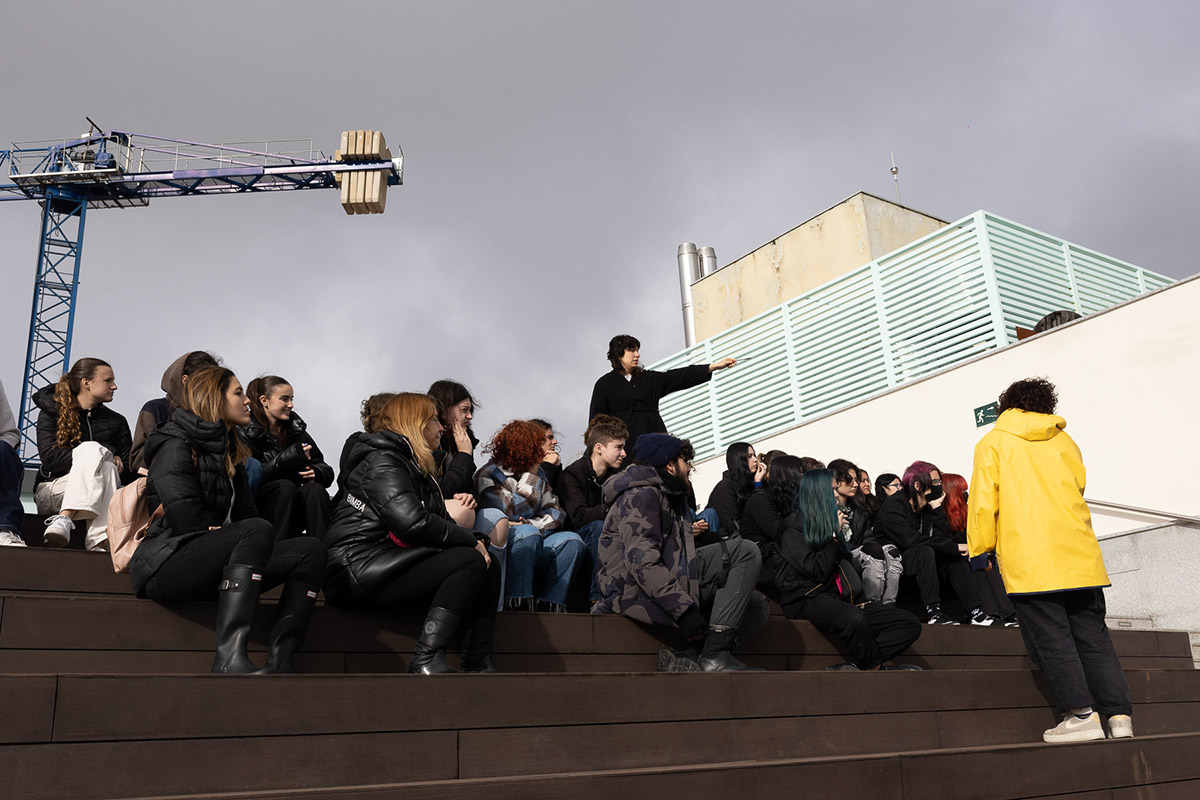
Aimed at secondary school students, this visit-workshop focuses on the act of painting, and more specifically on thinking about colours. If you give them time, colours become mysterious. Many of them came about initially as pigments for artistic painting; sometimes their names refer to the geographical regions where they were first used or found, or to the minerals and chemical substances used in their composition.

The names for colours vary depending on cultures and people: it could be the case that the same name for a colour might suggest a different shade to people from different countries. In addition, some have a very precise and unambiguous definition, while others only give vague hints. We can see, for instance, that the sky above Móstoles at 2:26 pm today is Móstoles blue, Thursday blue or sky grey. But that is not exactly it either.

One thing that strikes us as fundamental in Mitsuo Miura’s work is his way of looking at his surroundings, of noticing all the minute changes. Colours, but also humidity, shadows and the weather are all raw material to construct by using what is available to us and to expand the world we think we see.

Discover more about the exhibition  Mitsuo Miura. Almost 400 m² for Two Landscapes.

Enrol with your class HERE.

Activity type
Dates
every Wednesday
Target audience
Acceso notas adicionales

GRUPOS ESCOLARES HASTA 30 PERSONAS

Entrance

Aimed at secondary school students, this visit-workshop focuses on the act of painting, and more specifically on thinking about colours. If you give them time, colours become mysterious. Many of them came about initially as pigments for artistic painting; sometimes their names refer to the geographical regions where they were first used or found, or to the minerals and chemical substances used in their composition.

Subtitle
VISIT-WORKSHOP FOR SECONDARY STUDENTS TO THE MITSUO MIURA EXHIBITION
Categoría cabecera
Un encuentro fugaz
A FLEETING ENCOUNTER
More information and contact
Is it a cycle?
Disabled
Duration
from 11:00 to 13:30h